

Meaning
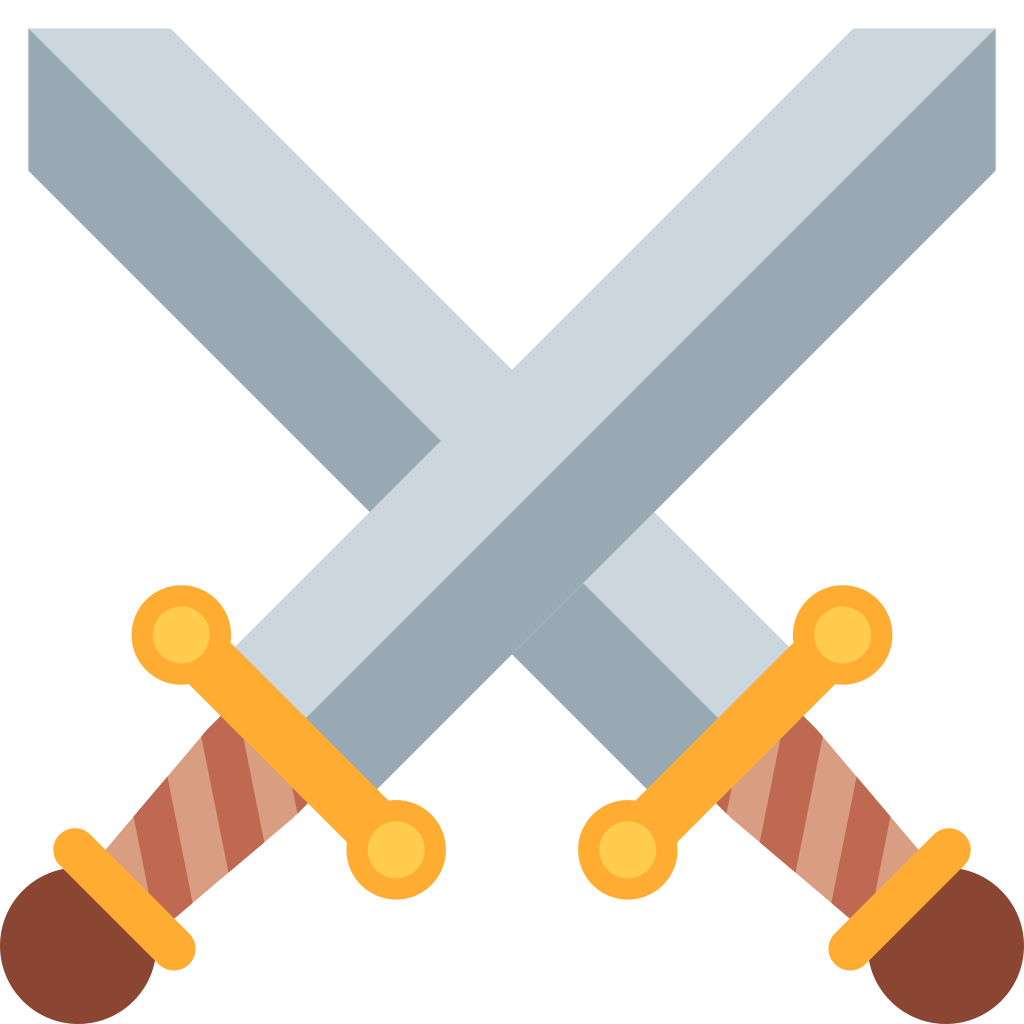
The crossed swords emoji depicts two swords crossed, representing battle, combat, or conflict. It often symbolizes struggle, challenge, or war, both physically and metaphorically.
Common Uses
- Indicating fighting, duels, or combat scenarios in conversation
- Showing rivalry or competition between parties
- Representing historical or medieval themes
- Signifying a metaphorical battle or argument
- Used in gaming contexts to denote combat or battle phases
Examples
Prepare for battle! ⚔Our teams are ready to face off ⚔Medieval festivals often use ⚔ symbols
🛒Beyond the screen: Grab one in real life.
Technical Notes
Unicode codepoint: U+2694. Added approximately in Unicode 1.1. Displays as two crossed swords, typically showing shiny blades with distinct hilts. No skin tone variants available.
FAQ
- What does the ⚔ emoji mean?
-
It represents combat, battle, or conflict situations.
- How is the ⚔ emoji used?
-
To indicate fighting, rivalry, or metaphorical struggles in texts.
- Does the meaning of the ⚔ emoji change by context?
-
Yes, it varies from literal battles to symbolic conflicts depending on usage.
Frequently Asked Questions
Can I use the Crossed Swords emoji in professional settings?
While the Crossed Swords emoji is popular in casual messaging, it is generally best to avoid using it in formal professional emails or business documents. In less formal workplace chats like Slack or Teams, it can be appropriate depending on your company culture and the context of the conversation.
What are some creative ways to use the Crossed Swords emoji?
You can use the Crossed Swords emoji creatively in social media captions, Instagram stories, or Twitter posts to add personality to your content. Try combining it with other related emojis to create emoji art or to tell a visual story. Many content creators also use it in their bios or usernames for a distinctive touch.
Is the Crossed Swords emoji available on all devices?
The Crossed Swords emoji is supported on most modern devices and platforms including iOS, Android, Windows, and macOS. However, older devices or operating systems may not display it correctly. If the recipient’s device doesn’t support it, they might see a blank square or a question mark instead.