

Meaning
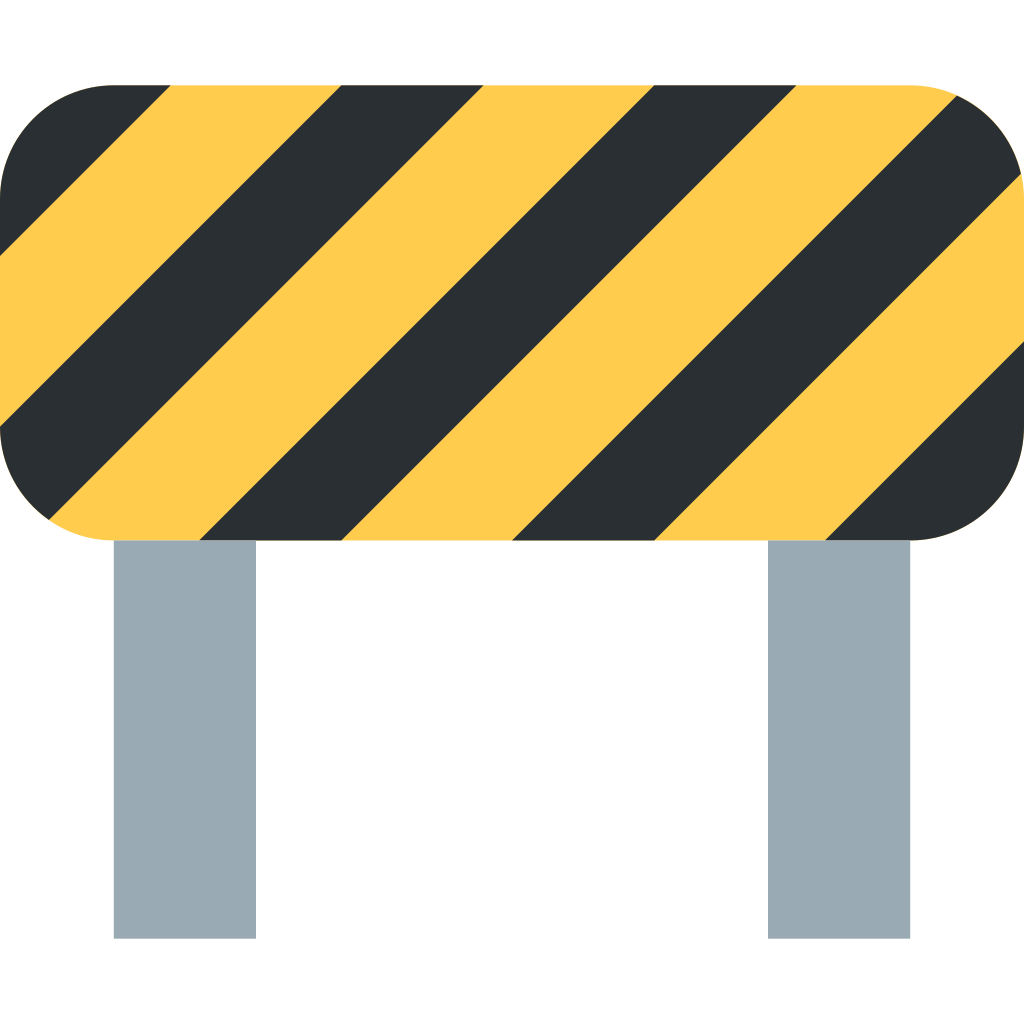
The 🚧 emoji represents a construction barrier commonly used to warn of building work or road closures. It signals caution and alerts users to ongoing tasks or temporary obstacles.
Common Uses
- Indicating real or metaphorical work in progress.
- Warning about delays or disruptions.
- Marking construction zones or repair areas.
- Signaling technical issues or updates.
Examples
Work in progress 🚧Website maintenance 🚧Caution: road closed 🚧🛒Beyond the screen: Plan your next trip with
Technical Notes
This emoji uses the codepoint U+1F6A7 and has been part of Unicode since the mid-2010s. Appearance may vary, but it typically shows orange and white striped barricades. No skin tone variations are available.
FAQ
What does the 🚧 emoji mean?
A symbol for construction, caution, or work in progress.
How is the 🚧 emoji used?
To denote construction zones, ongoing tasks, delays, or warnings.
Does the meaning of the 🚧 emoji change by context?
It can refer to literal construction or metaphorical progress depending on the context.
Internal Links
- Previous emoji
- Next emoji
Frequently Asked Questions
Can I use the Construction emoji in professional settings?
While the Construction emoji is popular in casual messaging, it is generally best to avoid using it in formal professional emails or business documents. In less formal workplace chats like Slack or Teams, it can be appropriate depending on your company culture and the context of the conversation.
What are some creative ways to use the Construction emoji?
You can use the Construction emoji creatively in social media captions, Instagram stories, or Twitter posts to add personality to your content. Try combining it with other related emojis to create emoji art or to tell a visual story. Many content creators also use it in their bios or usernames for a distinctive touch.
Is the Construction emoji available on all devices?
The Construction emoji is supported on most modern devices and platforms including iOS, Android, Windows, and macOS. However, older devices or operating systems may not display it correctly. If the recipient’s device doesn’t support it, they might see a blank square or a question mark instead.